
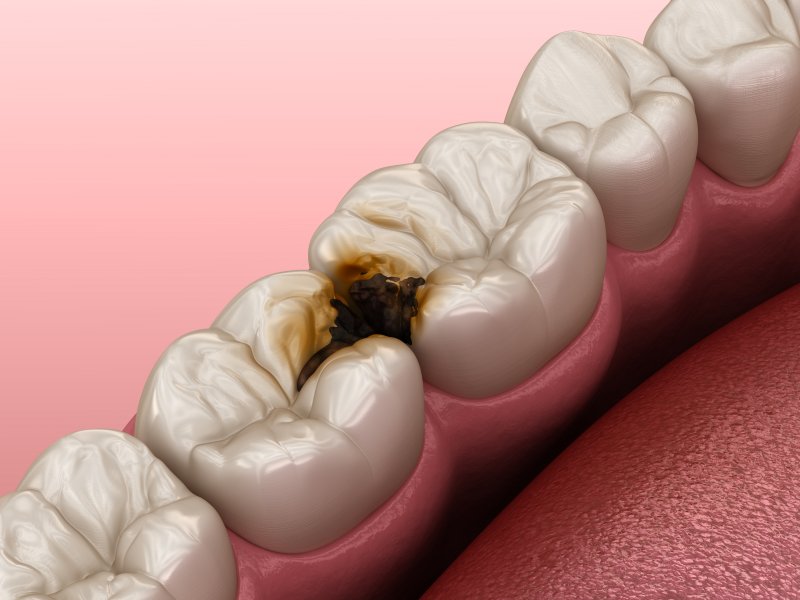
Cavities are a common occurrence among children. While preventive services and good at-home oral hygiene help lower the risk, they can still develop. Many will form on the tooth surfaces, making them more visible. However, it’s also possible for them to show up between your child’s pearly whites, but how can you tell? Keep reading to learn what symptoms your child might experience and when you should plan to take them in for a scheduled appointment.
What Signs Indicate an Interproximal Cavity?
Decay that forms between teeth is also known as interproximal cavities. This may be harder to detect, but if your child begins to experience any of the following, go ahead and plan to call the dentist’s office to schedule an appointment:
- Your child complains of tooth sensitivity when eating hot, cold, or sweet foods or beverages.
- Your child complains of pain when biting down, as this can mean the decay is near a nerve.
- Your child feels a dull ache or discomfort associated with the tooth.
- You notice a tooth appears discolored.
- Your child develops bad breath or complains of a bad taste in their mouth.
How Can a Dentist Treat Your Child’s Cavity?
When dealing with an interproximal cavity, your child’s dentist will need to examine the affected area to determine the extent of the damage. Based on their findings, they may recommend one of a few different treatment options:
- Dental Fillings: If the cavity is small, a dental filling can be used to repair the problem area. With a composite or resin filling, the white material will blend in with their natural smile while also sealing off the space from possible reinfection.
- Dental Crowns: If the cavity is larger, a filling will not be enough, which is why we will recommend silver or stainless-steel crowns. These will help maintain the shape of their teeth and safeguard against additional cavities.
- Pulpotomy: If a cavity forms between your child’s baby teeth and it spreads near the nerve, a pulpotomy may be required. This involves removing the nerve’s upper portion and adding medication to protect the remaining tooth.
- Silver Diamine Fluoride: Depending on the extent of the cavity, silver diamine fluoride may be recommended, as it involves painting on an antimicrobial liquid to slow further progression.
If your child is complaining of tooth pain or sensitivity, don’t wait to seek professional treatment. Call and schedule an appointment so that proper restorative care can be used to repair and restore their smile.
About the Author
Dr. Sheh Vahid is a board-certified pediatric dentist who provides exceptional care to young patients. Providing a kid-friendly environment, she uses a wide range of restorative services to repair damaged or decayed teeth. Regardless of where a cavity forms, she has the techniques and materials to stop further harm. Visit our website or call us if you believe your child has a tooth problem that needs a thorough examination.